It's Halloween. Can We Finally Talk About Death? Anyone? Hello?
Nov 04, 2026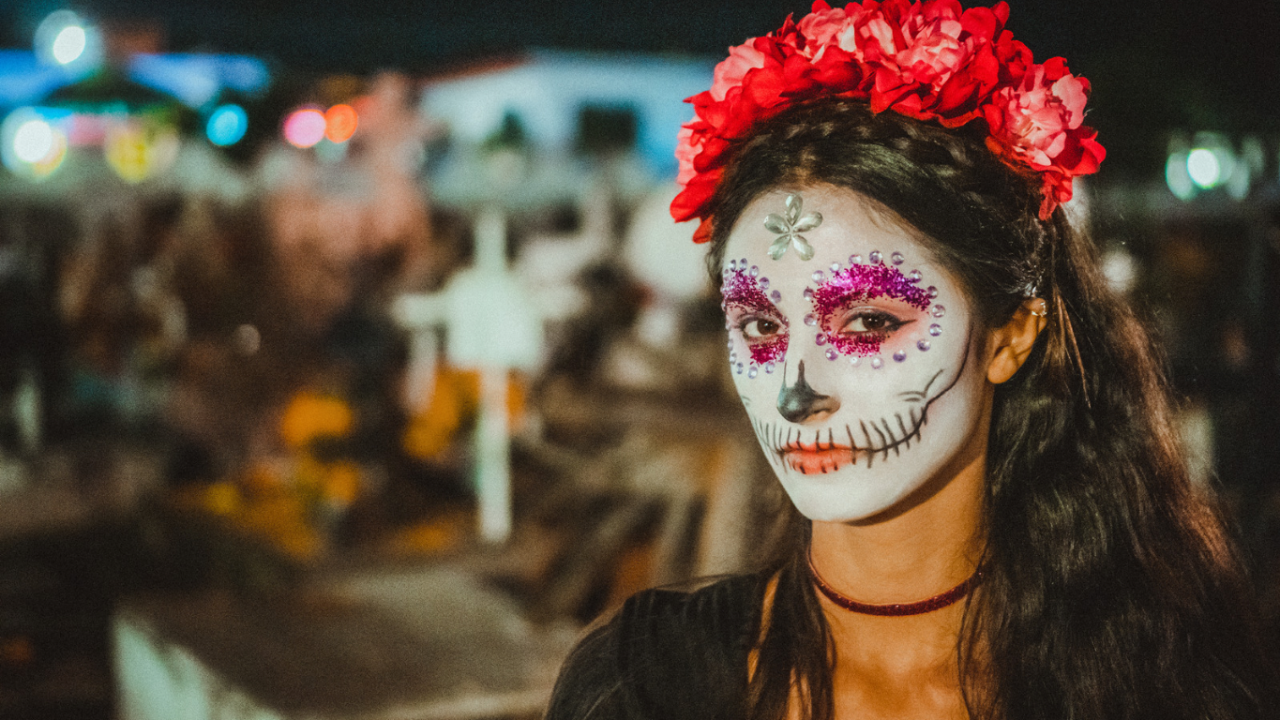
Why is the one certainty in life the very thing we refuse to talk about?
Today, as we mark Samhain, I find myself returning to a question I have pondered for many years.
Why are we so afraid of death that we can barely bring ourselves to talk about it?
In the ancient Celtic tradition, Samhain marks a powerful turning point in the natural cycle of the seasons. As autumn gives way to winter and the earth begins its period of rest, the veil between the physical and spiritual worlds is believed to be at its thinnest.
It is a time when the unseen world is said to draw closer, reminding us that death is not separate from life, but part of the eternal cycle of death and rebirth. What appears to be an ending in the natural world is also part of the process through which new life will eventually emerge.
Yet somewhere along the way, much of Western society seems to have lost the understanding and connection to death that our ancestors once held. They recognised it not as something to fear or hide away from, but as a necessary part of life and our spiritual existence.
It is rather strange when you think about it.
We are quite happy to invite death into our homes at Halloween, dressing up as ghosts and skeletons, watching horror films and frightening the living daylights out of children. For one night, we turn death into entertainment. Yet for the other 364 days of the year, we can barely bring ourselves to have an honest conversation about it.
Not death as something we occasionally think about, or something that happens to somebody else, somewhere else, behind closed doors.
I mean death itself.
The reality that, one day, each of us will reach the end of our earthly life.
There, I have said it.
It is perhaps the one experience every human being shares, regardless of who we are, where we come from, what we believe or how much money we have accumulated.
Yet we behave as though talking about it might somehow bring it closer. Death has become one of society’s great taboos, a subject so uncomfortable that people will do almost anything to avoid it. Bring it up in conversation and watch how quickly the subject changes, or how suddenly people find somewhere else they need to be.
As a spiritual medium and seer, death and the spiritual world are part of my everyday reality. Connecting with those who have passed is as much a part of my earthly experience as anything else. Perhaps that is why I find people’s reactions so bizarre. What feels perfectly natural to me is something that others seem determined to avoid at all costs.
When Did We Start Hiding Death?
For generations before us, death was a much more visible and accepted part of everyday life.
People often died at home, surrounded by their families. When someone passed, it was customary in many communities for their body to remain at home, where family, friends and neighbours would gather to pay their respects. Open coffins, wakes and vigils were part of the grieving process. Loved ones would sit with the deceased, share stories, offer prayers and support one another through their loss.
Children grew up witnessing the ageing, dying and grieving process. Death was painful, certainly, but it was not something hidden away from ordinary life.
Today, much of that experience takes place behind hospital doors, in care homes and other institutions. Death has become increasingly sanitised, with the reality of dying largely hidden from view, leaving us more disconnected than ever from one of the most natural experiences of human existence.
We rarely see it. We struggle to discuss it. We often find ourselves at a loss when faced with someone who is grieving.
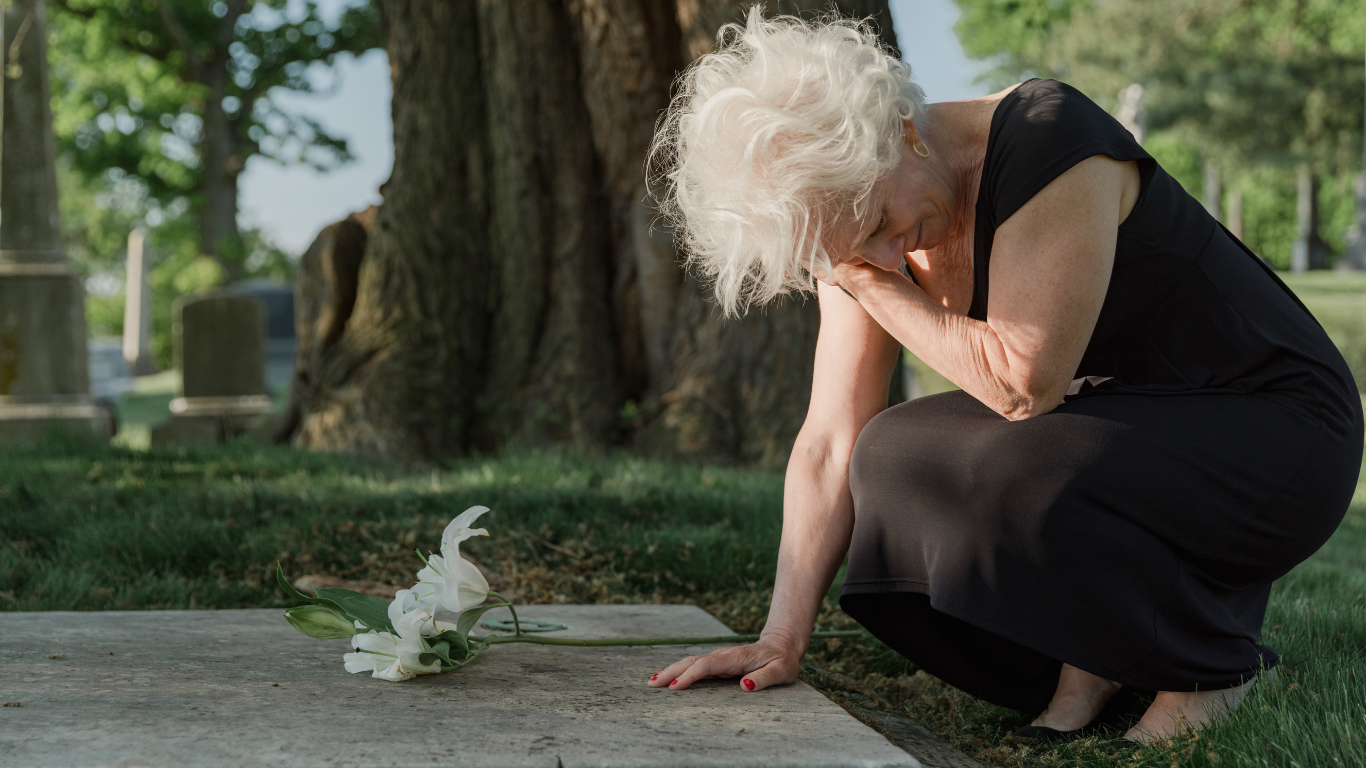
Think about how uncomfortable people can become when somebody mentions a loved one who has died.
The conversation changes. Someone looks away. Another person quickly introduces a different subject. Some people will even cross the road to avoid someone who is grieving, simply because they do not know what to say.
Perhaps they are afraid of upsetting the person.
Yet sometimes the person who is grieving desperately wants to talk about the one they have lost.
They want to hear their name spoken. They want to share a memory. They want to know that the person who meant so much to them has not simply disappeared from everybody else’s world.
Death has become something we are expected to deal with privately, often while the rest of the world carries on as though nothing has happened.
I wonder whether, in trying to protect ourselves from the discomfort of death, we have also lost some of our ability to be present with those who are facing it.
Why Does Death Frighten Us So Much?
I suspect that much of our fear of death has less to do with death itself and more to do with what it forces us to confront.
We like to believe that we are in control.
We make plans. We build careers. We accumulate possessions. We become attached to our identities, our relationships and the lives we have constructed.
Somewhere in the background sits the assumption that there will always be more time.
More time to say what needs saying.
More time to repair a relationship.
More time to follow the calling we keep putting off.
More time to become the person we know, somewhere deep inside, we are capable of being.
Death confronts us with the uncomfortable truth that none of this is guaranteed.
From a psychological perspective, the ego is deeply invested in maintaining our sense of identity and continuity. It wants to preserve what it knows, what it has built and what it believes itself to be.
Death threatens that entire structure.
It reminds us that the identity we have spent a lifetime constructing is not permanent.
Perhaps that is why contemplating our mortality can be so unsettling.
It asks questions we might rather avoid.
Have I actually lived the life I wanted to live?
How much of who I truly am have I sacrificed in my need for approval, playing small to feel safe and trying to belong in places where I never really fitted?
How often have I kept my heart closed, afraid to truly love for fear of being hurt, rejected or betrayed?
How many decisions have I made from fear rather than from my own inner knowing?
How much of my life have I spent waiting for permission to be myself?
These are not comfortable questions.
Yet perhaps they are among the most important questions we can ever ask.
Mary Oliver expresses this beautifully in her poem In Blackwater Woods, where she reminds us of three essential things:
“To live in this world
you must be able
to do three things:
to love what is mortal;
to hold it against your bones knowing
your own life depends on it;
and, when the time comes to let it go,
to let it go.”
Perhaps the greatest tragedy is not that our lives must eventually end, but that so many of us reach the end having been too afraid to truly live.
Death Is Part of Spiritual Initiation
Death does not only appear at the end of our physical lives.
There are other deaths we experience while we are still very much alive.
The death of a relationship.
The death of a belief we once held as absolute truth.
The death of an identity we spent years constructing.
The death of a future we thought was certain.
Sometimes these experiences arrive through betrayal, abandonment, illness, loss or circumstances we would never have consciously chosen.
One day, the life we recognised is there. The next, something happens that changes everything.
We can no longer return to the person we were before.
Anyone who has experienced a profound awakening or an initiation through suffering will recognise something of this.
There comes a point when the old way of seeing ourselves and the world simply stops working.
We may resist it. We may try to rebuild what has fallen apart. We may desperately want things to return to how they were.
Yet sometimes there is no going back.
In the Hero’s Journey, this is reflected in the descent into the unknown, where the familiar self must undergo a symbolic death before something new can emerge.
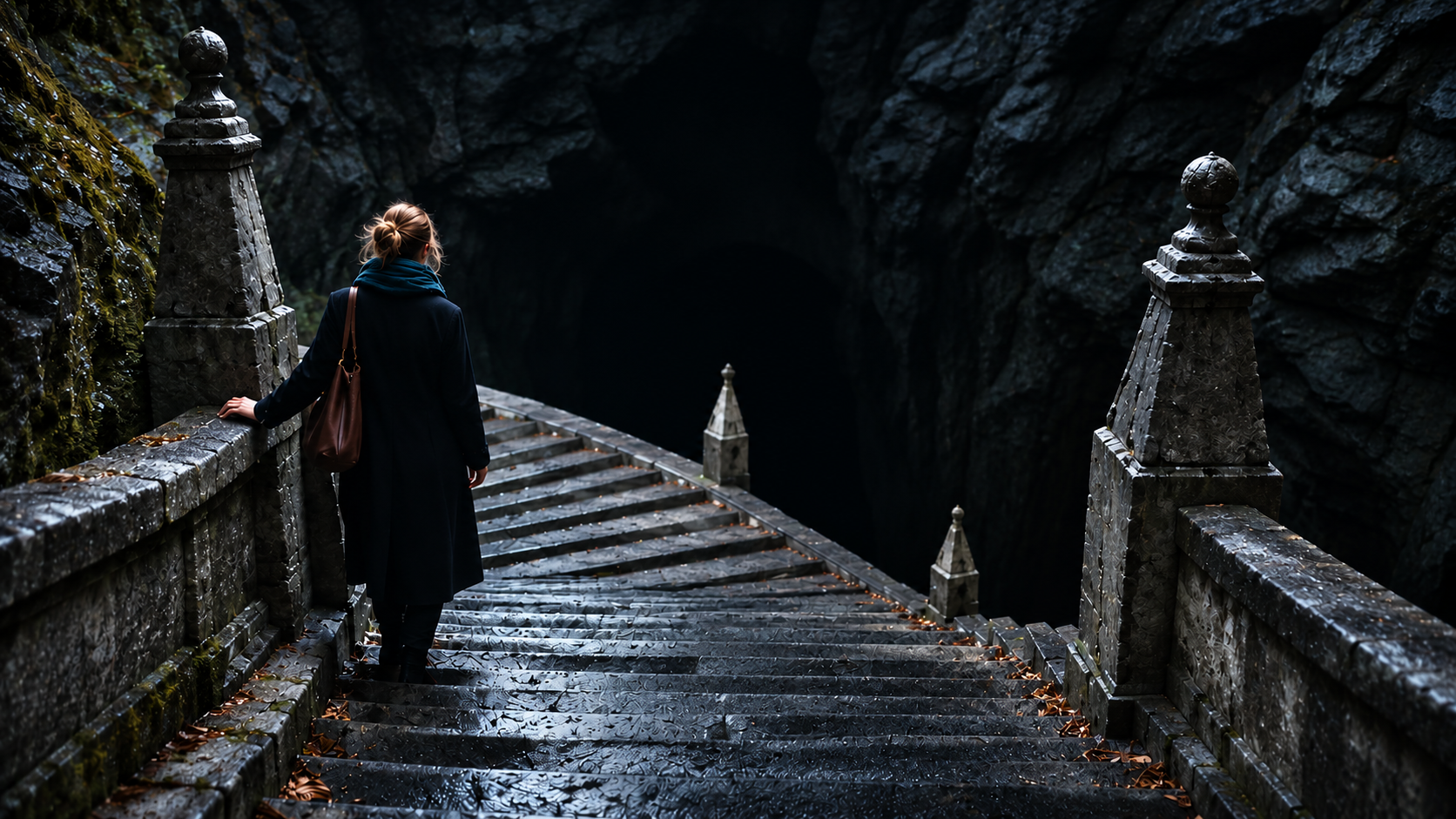
In alchemy, the nigredo, or blackening, represents a stage of breakdown and dissolution. What was previously held together begins to fall apart.
It can be a deeply disorientating experience.
We do not yet know who we are becoming, but we can no longer pretend to be who we were.
This is one of the reasons I believe understanding death is so important to spiritual development.
We cannot move through life without encountering endings.
The question is whether we can learn to recognise when something has reached the end of its natural cycle, rather than spending years trying to keep it alive because we are afraid of what comes next.
Nature does not resist autumn because it fears winter.
The trees release their leaves. The earth withdraws into its period of rest. What appears lifeless on the surface is still participating in a much greater cycle.
Perhaps we have something to learn from that.
What Would Change If You Truly Accepted That You Are Going to Die?
I wonder how differently we might live if we genuinely accepted our mortality, rather than spending our lives pretending death is something that only happens to other people.
Not in a morbid or fearful way.
In a way that reminds us how precious our time actually is.
Would we spend quite so much of our lives worrying about what other people think?
Would we remain in situations that diminish us simply because leaving would mean facing the unknown?
Would we keep postponing the things that matter most?
I suspect many of us would make very different choices.
There is something about recognising the temporary nature of physical life that can strip away an enormous amount of nonsense.
The arguments that seemed so important.
The need to be right.
The endless comparisons.
The years spent trying to become somebody we thought other people would find acceptable.
I have come to believe that life is ultimately about connection. About how deeply we allow ourselves to love and be loved.
When we return to the spirit world, I do not believe it is the trinkets our ego has accumulated that we remember. The possessions, the status, the need to impress or prove ourselves.
What matters are the connections we have made, the people we have loved and those who have loved us in return.
Over and over again, in my work as a medium, loved ones who have passed beyond the veil come through with a similar message to their loved ones. They wish they had loved more and spent less time being busy with things that, in the end, simply did not matter.
Yet there is a price to loving deeply.
When someone we love passes beyond the veil, we grieve. Sometimes that grief is almost unbearable. The deeper the love, the deeper the grief. That is the price we pay for allowing another person to mean so much to us.
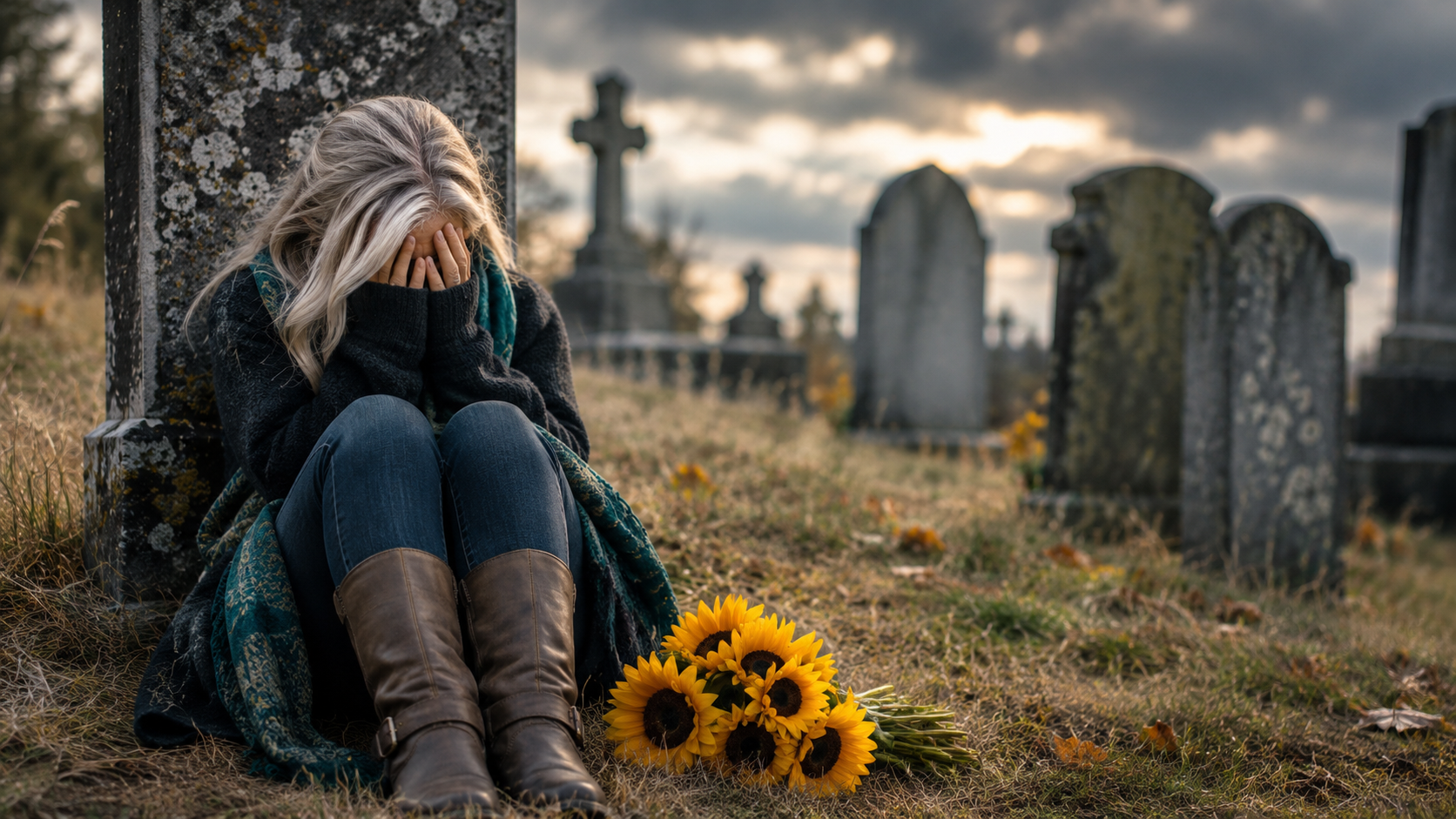
Would we really choose to love less simply to avoid the pain of losing someone?
Perhaps one of the greatest acts of courage in this life is to keep our hearts open, knowing full well that one day they may be broken.
After all, what is the point of protecting ourselves from the pain of loss if, in doing so, we also protect ourselves from the very experience we came here to have?
To love.
To connect.
To experience what it means to be human.
None of us knows how much time we have.
That is not a reason to live in fear.
It is a reason to pay attention to the life we are living now.
To recognise what matters.
To stop abandoning our dreams and purpose in the hope of being accepted by others.
To say what needs saying while there is still time to say it.
Perhaps learning to live consciously also requires us to develop a more honest relationship with death.
Learning to Trust the Natural Rhythm of Endings
As we mark Samhain, perhaps there is something worth remembering.
Death and rebirth are woven into the very fabric of existence. Yet we human beings seem determined to resist the endings that life inevitably brings.
We hold on to relationships long after they have ceased to be what they once were. We cling to identities that no longer reflect who we are. We fight to preserve beliefs that life itself has shown us are no longer true.
Sometimes we are so afraid of losing what we know that we fail to recognise what it is costing us to keep holding on.
Perhaps part of spiritual maturity is learning to recognise when something has reached its natural conclusion.
Not every ending is a failure.
Not everything that dies was meant to continue.
Sometimes the very thing we are trying desperately to preserve is what prevents the next stage of our lives from unfolding.
Samhain reminds us that darkness, endings and the unknown are not interruptions to the natural order.
They are part of it.
Perhaps the real question is not simply why we fear death.
Perhaps it is why we have become so afraid of endings that we sometimes forget how to live.
Deep down, we all know that our time here is limited. Yet somehow, in the midst of everyday life, it is easy to forget what that really means.
I wonder how much of our fear of death comes from the thought of losing everything we have come to believe makes us who we are, or from the uncertainty of what lies beyond the veil, including whether anything exists beyond it at all.
Tomorrow, on Día de los Muertos, the Day of the Dead, I want to take this conversation somewhere a little more personal.
I want to share what happened during my own near-death experience, why I came away with the extraordinary realisation that I had never felt more alive, and why, after years of working as a medium, I have come to understand death rather differently from how we are generally taught to see it.
What if death is not the opposite of birth? What if it is another kind of birth altogether?
I will leave that thought with you until tomorrow.
For now, I am curious about something.
Have you ever experienced an ending that felt like the death of everything you knew, only to discover, much later, that it was the very thing that made a different life possible?
Perhaps we have more to learn from our endings than we realise.
Author